Enduring Community Impact
Written by Kiyomi Kishaba Lilley
Friday, October 30, 2026
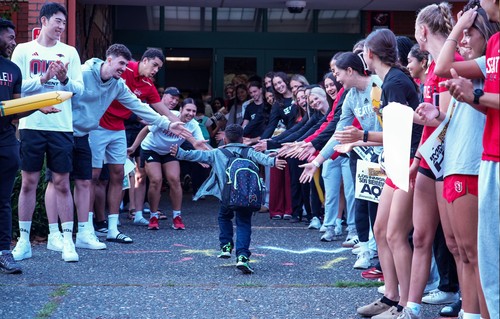
The Seattle University Youth Initiative celebrates 15 years of supporting Seattle youth and their families.
For the past 15 years, the Seattle University Youth Initiative (SUYI) has partnered with dozens of community-based organizations to create a Pre-K-to-career pathway for students and families in a two-square mile neighborhood adjacent to campus, an area that encompasses Bailey Gatzert Elementary and Yesler Terrace.
To trace the origins of what has today become a transformational program you must go back to 2004, the year when the Center for Service and Community Engagement—now the Sundborg Center for Community Engagement (CCE)—was created. Then-President Stephen Sundborg, S.J., and Jim Sinegal, cofounder of Costco and a former SU Trustee, were looking to further the university’s impact on its neighbors. Inspired by place-based engagement programs at San Diego State University and the University of San Diego, representatives from CCE embarked on a listening tour with community partners to identify existing needs.
“We narrowed down the focus to youth and children,” says Kent Koth, executive director of CCE since 2004. “We were already connecting university courses to the community, but it wasn’t very focused geographically.”
With initial funding from Sinegal—and following years of discussions and development—the Seattle University Youth Initiative officially launched in 2011. In addition to Bailey Gatzert, SUYI supports Washington Middle School and Garfield High School, an area that serves about 20,000 residents.
“The Seattle University Youth Initiative pursues a triple bottom line—supporting the education of Seattle’s children, teaching SU students to lead for a just and humane world and challenging other universities to think more boldly about their public purpose,” says Sinegal.
Mentoring the Next Generation
One of the first things SUYI accomplished when it began was launching that same year the Redhawk Academic Mentoring Program (RAMP) at Bailey Gatzert, providing in-class support and afterschool programming four days a week. The programming is run locally by an SUYI staff member with SU students serving as mentors and tutors. And in its first year supported by SUYI, Bailey Gatzert had the highest academic growth rate of any Seattle school.
With the success at Bailey Gatzert, RAMP expanded to include Washington Middle School in 2015. The program pairs an SU student with a middle school scholar for one-on-one mentoring during the scholar’s elective period. A group of 20 SU mentors also lead activities for more than 50 scholars to provide academic support, organizational skills and resources for well-being.
“We try as best we can to make mentor matches so that our scholars can see people who look like them, sound like them and share their interests and experiences,” says LaKesha Kimbrough, former Washington Middle School site manager and current senior director of SUYI.
Third-year psychology major Connie Fields, ’27, began as a SUYI scholar at Bailey Gatzert and continued through middle school. When it was time to decide on a college, Fields knew SU was the best choice.
In her first year at SU, Fields began volunteering with SUYI alongside Makaelah Smith, ’18, ’26 EDAD, associate director of Change Makers and one of Fields’ former mentors at Bailey Gatzert.
“Being able to work alongside her now and give back to other scholars really feels like a full-circle moment,” says Fields. “The SUYI program helped shape me in ways that I’ll carry with me forever.”
Engaging the Whole Family
To fully invest in the neighborhood, SUYI founded the Family Engagement program in 2013, centering three areas of support: communication, connection to SU and connection to local schools and resources.
The Family Engagement program provides free summer programming to more than 100 scholars and hosts family field trips to local events like Cirque du Soleil and Seattle Sounders games. SUYI also prioritizes making scholars and their families feel part of the SU community by partnering with SU Athletics and the Maker Space to host events and workshops.
“When we focus on the scholar and don’t acknowledge that they already come from amazing spaces, we are ignoring the people who have been supporting this young person since birth,” Kimbrough says. “If we truly want to see a young person thrive, we need to ensure that the family thrives.”
Samadi Gonzalez-Garcia, ’29, an electrical engineering major at SU, began as a scholar at Bailey Gatzert and now mentors a new generation of SUYI scholars.
“It is exciting to see how I can make an impact on the youth, just as SUYI made a positive impact on me when I was once in their shoes,” says Gonzalez-Garcia. “All the field trips are always a highlight because they were so much fun when I was a scholar.”
Preparing for the Next Step
In 2021, SUYI introduced the Change Makers program at Garfield High School. Japhia McRae, ’28, was in the inaugural cohort as a high school freshman. Working with SU student mentors demystified college-readiness processes like applying for financial aid through FAFSA and Running Start, helping McRae prepare to attend college.
“Just having someone there to support me really helped when I was looking into going to college, so I wanted to be that person for someone else,” says McRae, who is a mentor with the Change Makers.
The program focuses on college and career readiness through bi-monthly cohort meetings and mentorship all four years of high school. Now, Change Makers supports a group of 30 scholars with consistent programming and a summit to engage families in talking about life after high school. And its impact is palpable—75 percent of scholars in the program attend four-year universities—and SUYI donors provide scholarships to scholars who choose to become a Redhawk.
A Model for Others
With 15 years of intentional, place-based community programming, SUYI has become an example for universities across the nation.
“We are a university taking our public commitment seriously. Within the first five years of SUYI, universities were visiting campus to replicate what we were doing,” Koth says.
Robert D. Kelly, PhD, current president of the University of Portland and former Vice President of Student Affairs at SU, was part of the initial research to create a place-based program at SU and now looks to SUYI as an example.
“Having witnessed the inception of the Seattle University Youth Initiative it is remarkable to see its evolution into a national model,” says Dr. Kelly. “When my team from the University of Portland visited to study this place-based framework, it underscored a vital truth: a university’s deep, foundational commitment to its neighborhood does not merely transform the local community—it provides an essential blueprint for higher education as a whole.”
SUYI continues to be at the forefront of community programming. In 2024, SUYI launched a groundbreaking, community-led funding model at Yesler Terrace, a recently redeveloped mixed-income community. The Yesler Terrace Legacy Commitment (YTLC) is an agreement between CCE and the Seattle Housing Authority (SHA), in partnership with the Seattle Foundation.
SUYI also recently launched the Read, Inspire, Support, Educate (RISE) Program for Early Learning. A reimagination of CCE’s Jumpstart program that ended in 2025 due to government cuts to AmeriCorps programs, RISE places SU students in Pre-K classrooms across Seattle to deliver literacy, language and social-emotional learning curriculum.
While celebrating the 15-year milestone and the success of SUYI programs, Koth and Kimbrough recognize that there is still work to do.
“What I’m really hoping for in the next 15 years is that we see programs and initiatives that are truly in response to what the community needs,” Kimbrough says. “I hope the Youth Initiative can be a beautiful example nationally and globally of what it means to walk alongside communities in support of reaching multiple goals through multiple paths.”
Similar News & Stories
-
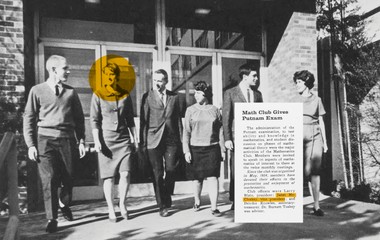
Making Her Own Way
Seattle University MagazineJanet Brittain, ’67, looks back on a pioneering career in aerospace and shares why she’s encouraged to see more women pursuing STEM. -
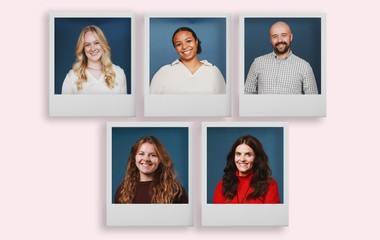
An Affinity for Engagement
Seattle University MagazineMeet the new assistant directors that aim to provide a more personalized, college and program specific experience for alumni. -
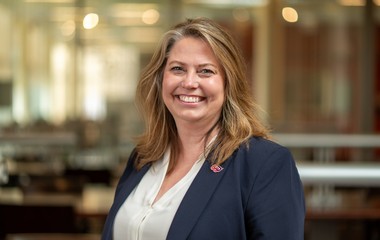
Safety Minded
Seattle University MagazineGet to know Seattle University’s new director of Public Safety Cheryl Logsdon and her priorities leading the department.